Battery Thermal CFD Analysis Services: Cooling KPIs, Solver Setup, and Validation Workflow
A practical engineering guide to EV battery thermal CFD covering cold plates, coolant balancing, pressure drop, cell temperature uniformity, validation evidence, and automation opportunities.
Problem Statement
EV battery packs demand tight thermal control across fast charging, peak power delivery, and hot-climate operation. A CFD program must answer where heat accumulates, how coolant distributes, and which geometry changes improve safety margins without adding unnecessary mass.
Engineering Challenge
The main challenge is balancing pressure drop, cell temperature uniformity, manufacturable cold-plate channels, pump limits, and pack-level packaging constraints. Good thermal CFD also needs defensible boundary conditions, heat-generation assumptions, and validation data from test or supplier curves.
Workflow Strategy
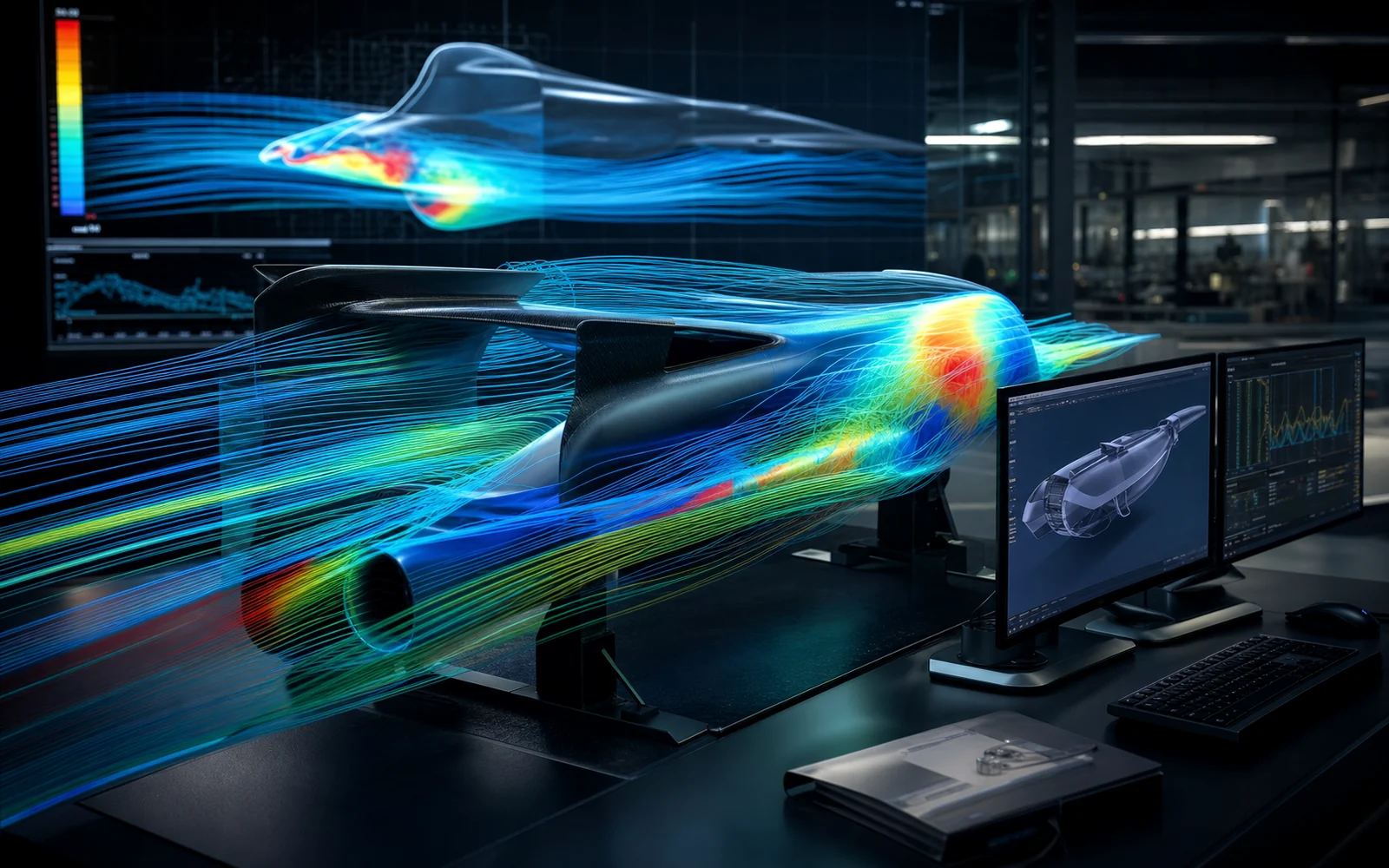
A robust workflow starts with CAD cleanup, fluid domain extraction, mesh independence checks, solver setup, conjugate heat transfer, pressure-drop review, and design comparison. PANSOFT typically turns repeated studies into templates so geometry variants, coolant flow rates, and operating cases can be compared consistently.
Tools Used
Common toolchains include ANSYS Fluent, STAR-CCM+, SpaceClaim, HyperMesh, Python automation, and reporting dashboards. For automation, Fluent journal files and Python scripts can standardize case setup, result extraction, contour generation, and KPI summaries.
Automation Possibilities
Automation can run channel-width variants, coolant-flow sweeps, heat-load envelopes, and report generation overnight. AI-assisted checks can flag missing material properties, unrealistic flow splits, poor mesh regions, or thermal KPIs outside acceptance bands.
Engineering KPIs
Important KPIs include maximum cell temperature, cell-to-cell delta temperature, cold-plate pressure drop, coolant velocity distribution, thermal resistance, mass impact, and pump power. Business impact comes from safer packs, fewer test iterations, and faster design decisions.
Conclusion
Battery thermal CFD is most valuable when treated as a decision workflow rather than a one-off contour plot. The search value comes from combining CFD consulting, validation discipline, and automation into a repeatable engineering system.
FAQs
What inputs are needed for battery thermal CFD?
CAD geometry, material properties, coolant data, cell heat generation, operating cases, contact assumptions, and validation targets are typically required.
Can battery CFD workflows be automated?
Yes. Geometry variants, solver setup templates, batch runs, contour exports, and KPI reports can be automated with Python and solver-native scripting.